Thursday, April 3, 2014

Keep The Story Alive

****SPOILER****
Just as Anne started the book with her birthday, she includes another birthday story towards the end of her diary. Describing her presents she writes, “I received…underwear…a handkerchief…yoghourt…jam…cake…book…sweet peas…” (Frank 247). This really creates a differentiation between her life at home versus her life in the annex. The presents she received at the beginning of the book would be a luxury for her now as her presents seem to become more mundane and depressing. These items go further than just explain what Anne got for her birthday. These presents set the mood of the story, giving it a depressing, unexciting feel.


The story becomes another story with a sad ending. Not only did a young girl reach demise, she died in a brutal fashion. After being captured and brought to Auschwitz, one of the toughest concentration camps, Anne was transferred to Belsen, where she reached a lack of food, water, and nutrition.  Although Anne died, her diary and spirit remain. Anne  was a truly brave young adult, and this diary keeps her ideals alive.
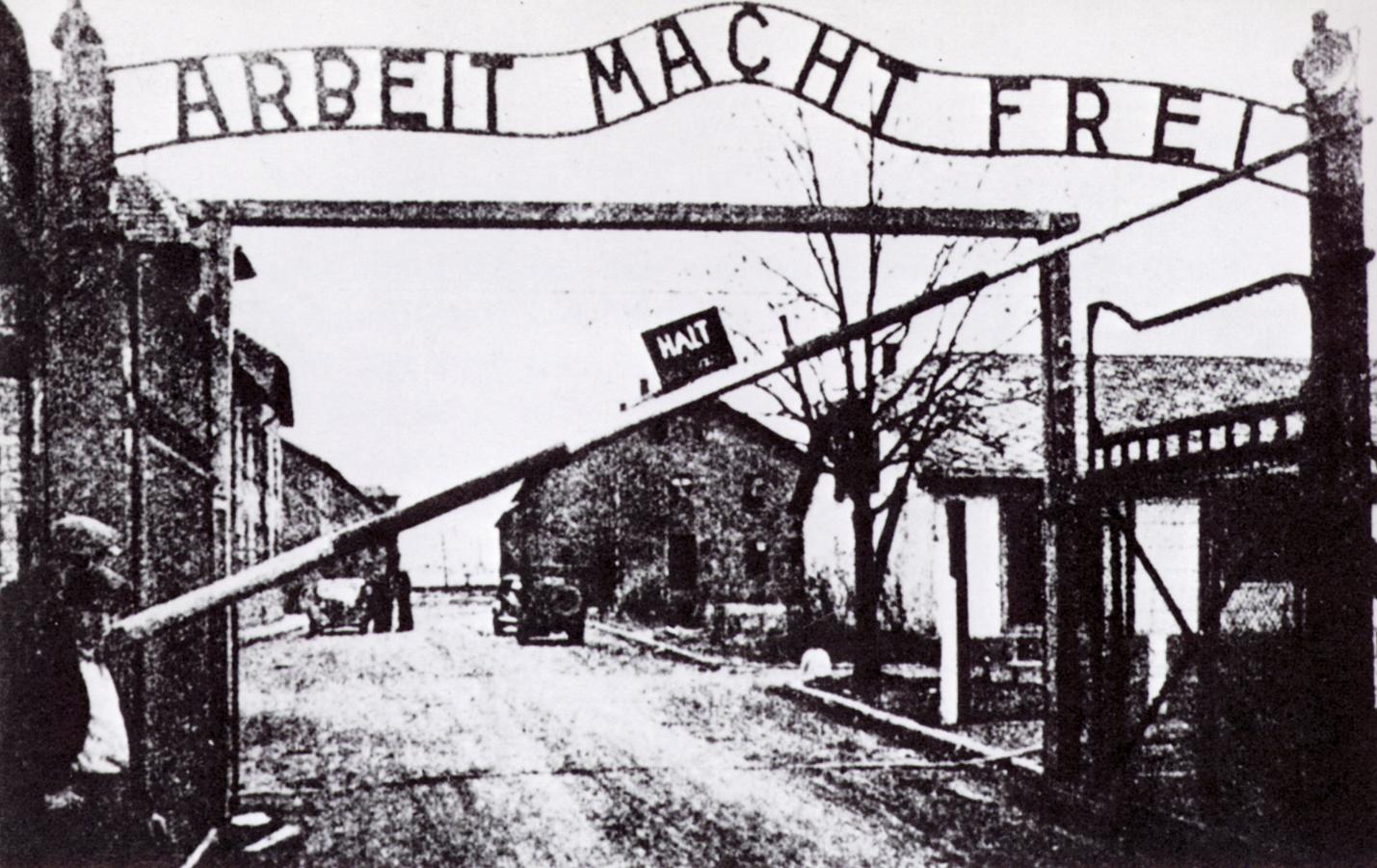
 
Auschwitz 
One of the best lines from Anne’s diary reads, “…and what I could be, if… there weren’t any other people living in the world” (Frank 268). If Anne didn’t have World War II and Hitler in her way she could live her life and enjoy her family/friends. She could become what she wanted to become instead of going crazy in a small hideaway or being killed in a harsh concentration camp.

Anne’s father, Otto, was actually able to make it out alive from his concentration camp, to return to the annex. He receives Anne’s diary and publishes it in over 30 countries to keep the story of Anne Frank, a brave soul, alive.


A sad ending to the story, and a sad way to end out our reading adventure. It was a pleasure writing for you guys over these couple of weeks. Bye for now!

Shhhh


In the book Anne Frank: The Diary of A Young Girl, the book begins with an introduction from Eleanor Roosevelt, the wife of our former 32nd president, Franklin Delano Roosevelt. Eleanor begins by discussing the bravery and courage of a young girl named Anne Frank. Halfway thorough the book, that is all I can think about; how brave Anne was. Before Anne gets very far in her diary entries, we find out that she must move to an annex in her father’s workplace to avoid the Nazis.

In a spontaneous move, the Frank’s are out their house and into the “Secret Annex” with another family, and one more man. I am so overwhelmed by the bravery in the Frank family. They quickly transition to another lifestyle in the blink of an eye, to save their lives. For instance, Anne begins her diary discussing her birthday, “I got masses of things from Mummy and Daddy, and was thoroughly spoiled by various friends” (Frank 1). Just over 100 diary pages later Anne is sick, “Grape sugar, cod-liver oil, yeast tables, and calcium have all been lined up” (Frank 113). It’s dangerous enough that the Frank’s are running from the Nazis, but sickness in the annex can easily spread (because of close quarters) and require medical attention. However, medical attention is not a possibility because it will draw attention to the annex, exactly opposite of what is needed.


I infer that Frank’s and the other families in the annex will figure out how to fix their issues and work it out. The option of getting caught caught by the Nazis and placed in a deadly concentration camp is worse than anything they will face in the annex.

As I approach the climax, peace for now.

The Diary of A Young Girl (Book #4)

Hey again! I am about to dive into my next book, Anne Frank: The Diary of A Young Girl. Since this is a diary, the author is Anne Frank herself. I know that she writes about her time hiding away from Hitler and the Nazi party during the Holocaust. As many of you know, the Holocaust was a period of time, between 1933 and 1945, in which Adolf Hitler and his Nazi party committed genocide on some six million Jews and some five million others. Anne Frank is Jewish and this diary illustrates her experiences attempting to survive day-to-day.

Personally, I have ancestors in the Holocaust, some of which survived and some of which did not, and I feel that I need to understand how they must have felt. I know this will be a very sad book, but I cannot hide from the truth of the event. 

I predict that ultimately Anne will not survive because of the brutality of Hitler and the Nazis, but that is to find out later today.

I will report back when I get further. Peace.

...but he seemed so innocent

****SPOILER ALERT****


I finished reading Of Mice and Men and now I feel a bit sad. I did enjoy the book and Steinbeck’s craft as an author, but I am saddened by Lennie’s death. What really surprised me was the ending of the book. I was expecting a peaceful ending where the main characters “win” like in most stories, but this one did not end like that. Although Lennie would have been lynched and tortured, the death of a man that never tried to hurt anyone makes me sad. The worst part of it was that George, his best friend throughout the novel, was the one who killed him. George discusses their relationship, “"It ain't so funny, him an' me goin' aroun' together," George said at last. "Him and me was both born in Auburn. I knowed his Aunt Clara. She took him when he was a baby and raised him up. When his Aunt Clara died, Lennie just come along with me out workin'. Got kinda used to each other after a little while" (Steinbeck 39). As unfortunate as this seems, it needed to be done by George to protect Lennie from a worse, torturous death.

On a separate note, Steinbeck did an excellent job building up to the climax and concluding his novel. The climax did come surprisingly late in the story, however. Steinbeck provided a very successful exemplar of a full-circle ending, returning to the beautiful, still lake Lennie and George started our novel at. Steinbeck was very descriptive at this part just as he was earlier in the book when he writes, "Already the sun had left the valley to go climbing up the slopes of the Gabilan mountains, and the hilltops were rosy in the sun." (Steinbeck 99). The personification brings that descriptive sentence to life and exemplifies Steinbeck’s descriptive craft.


For any of you looking to read this book, I highly recommend it. Steinbeck penned a classic novel with Of Mice and Men containing an unexpected ending, great author’s craft, and animals. What else do you need in a good book?

Wednesday, April 2, 2014

Of Men and Farms


Hey guys! I am glad to say I am halfway through Of Mice and Men and looking to finish it today. Although there is not nearly as much action as Game of Thrones, I am enjoying the classic. Our two protagonists, Lennie Small and George Milton, set off to find a job in California. Early in the novel we are aware that Lennie has a mental handicap, and this plays a major role in the story.


From the start we are introduced to the symbols of animals and a farm Lennie and George hope to purchase later in life. Lennie comments, “I remember about the rabbits, George" (Steinbeck 18). George replies, “The hell with the rabbits. That's all you can ever remember is them rabbits." (Steinbeck 18-19). Both ideas represent a future that is too farfetched to exist. The reader learns that Lennie, a big guy who doesn’t know his own strength, kills a mouse earlier on although he loves animals. George must repeatedly tell Lennie of this farm, where Lennie will care for the rabbits, to keep him happy and under control. We know that the duo will most likely never have enough money to purchase this farm and let Lennie tend to the animals, but it keeps them focused on a dream nonetheless. 

As of now the men are working on another farm surviving during the Great Depression. The story is still on the rising action, building up to the climax where I see a conflict in the near future.

Anyway, see you for now!

Monday, March 31, 2014

Of Mice and Men: Intro (Book #3)


Back atcha with another book! I have started reading the classic Of Mice and Men, by Nobel Prize-winning author John Steinbeck. Steinbeck was born in 1902 inn Salinas, California, the setting for most of this novel. Of Mice and Men follows the plight of two ranch workers as they search for a job during the Great Depression. Some of the experiences in the book are based off of Steinbeck’s own experiences around this time period.   


Despite containing content marked as vulgar, racist, and offensive, Of Mice and Men finds its way into required reading for many schools. For now I can predict that this story will most likely take a saddened mood. Anyway, I have to get reading. See you guys soon.